AV Receiver vs Integrated Amp vs Stereo Receiver: Which Amp Do You Actually Need?
Published 2026-07-19 · By NetAudioHub Editorial
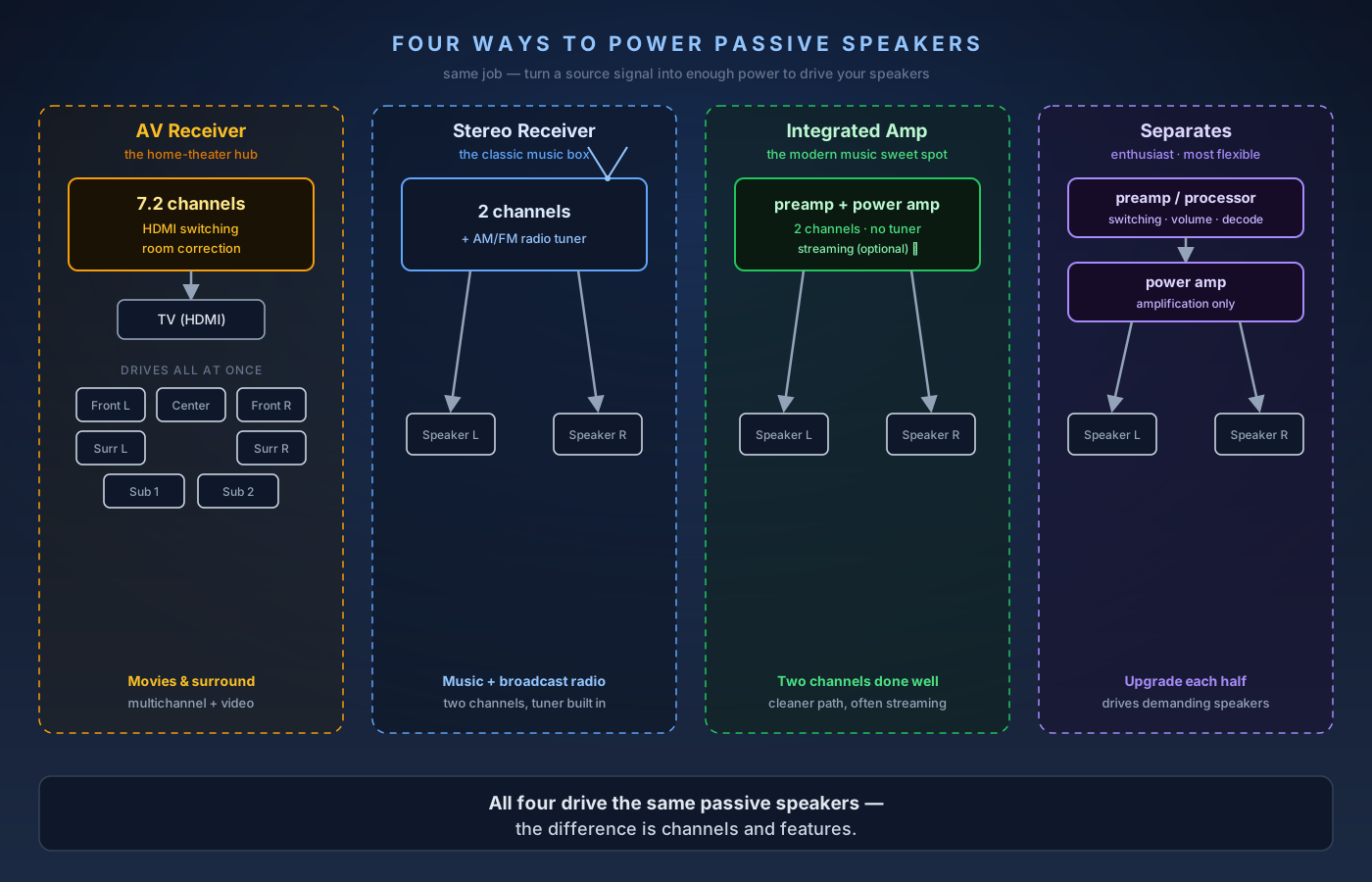
All four boxes do the same core job — turn a source signal into enough power to drive your passive speakers. What separates them is how many channels they run and what extras come bolted on. Answer one question — movies or music? — and the shortlist shrinks to one or two. Here's what each box does and how not to overbuy.
The verdict up front: all four of these boxes do the same core job — they take a weak source signal and amplify it enough to physically drive passive speakers (the kind with no power cord of their own). What separates them is how many channels they run and what extras come bolted on. An AV receiver is the multichannel home-theater box: 5, 7, or more channels, HDMI switching, and surround decoding for movies. A stereo receiver is two channels plus a built-in radio tuner — the classic music box. An integrated amplifier is two channels of amp plus a preamp in one chassis, with no tuner, and increasingly with streaming built in. Separates split the preamp and the power amp into two boxes for people chasing the last few percent of performance and flexibility. The decision comes down to one question you can answer in a sentence: are you building a home theater, or are you building a music system? Get that right and the rest is just picking power and ports. Below: what each box actually does, the movies-vs-music fork, and how not to overbuy.
The Four Boxes, Defined
Every one of these takes a line-level signal — from a streamer, a turntable's phono stage, a TV, a Blu-ray player — and boosts it to speaker level, the higher-voltage signal that actually moves a speaker's drivers. The differences are in packaging.
An AV receiver (AVR) is the hub of a home theater. It has multiple amplifier channels (5.2, 7.2, 9.2, and up — the first number is speakers, the second is subwoofer outputs), several HDMI inputs so it can switch between your consoles and players, and it decodes surround formats like Dolby Atmos and DTS:X. It also runs automatic room correction that measures your room with a microphone and tunes the sound to it. If you want a center channel for clear dialogue, surround speakers behind you, or height speakers overhead, an AVR is the only box on this list that can drive them all at once.
A stereo receiver is two channels — left and right — with an AM/FM (and often internet) radio tuner built in. That tuner is the one feature that technically makes it a "receiver" rather than an amplifier. It's the traditional heart of a two-channel music setup: connect a pair of bookshelf or floorstanding speakers, maybe a turntable, and you're listening. No surround, no HDMI video switching, no center channel — just clean stereo.
An integrated amplifier is a stereo receiver minus the radio tuner. It combines a preamp (which selects your source and controls volume) and a power amp (which does the heavy lifting) in one box, driving two speakers. Dropping the tuner is why audio purists often prefer them — fewer circuits, a cleaner signal path, and the budget spent on amplification instead of a radio most people never use. Modern "streaming integrated amps," like the WiiM Amp, fold Wi-Fi streaming, AirPlay, and app control into that same two-channel box, which is why they've become the default first amp for a lot of people building a music system today.
Separates split the job into two chassis: a preamp/processor (source switching, volume, and — in a home-theater "pre/pro" — surround decoding and room correction) feeding a standalone power amplifier that does nothing but amplify. Enthusiasts like separates because you can upgrade one half without the other, isolate the sensitive preamp circuitry from the heat and electrical noise of the power stage, and add a beefier amp for hard-to-drive speakers. For most homes it's more boxes, more cost, and more cables than the payoff justifies — but it's the ceiling if you ever get there.
Here's the one-line test: the box's job is always the same — power your passive speakers. Pick the box by counting how many channels you need and whether you're switching video through it.
The Real Deciding Question: Movies or Music?
Almost every "which amp" mistake comes from skipping this fork. Answer it first and the shortlist shrinks to one or two options.
If your speakers serve a TV — movies, streaming, gaming, sports — you want an AV receiver. It's the only box that switches your HDMI sources, decodes surround sound, drives a center channel for intelligible dialogue, and powers surround and height speakers. Even a "5.1" starter AVR does things a stereo box fundamentally can't. If dialogue clarity is your pain point, the center channel an AVR adds is usually the single biggest fix — more on that in our guide to why you can't hear movie dialogue.
If your speakers serve music — a pair of speakers in a room, a turntable, a streamer — you want an integrated amp (or a stereo receiver if you still listen to broadcast radio). Two channels done well beats seven channels done cheaply for pure music. A streaming integrated amp is the modern sweet spot: it's a music system in one small box, with the app and streaming baked in.
If you're doing both in one room — a TV and serious two-channel listening — an AV receiver is the pragmatic single-box answer, and many now have a dedicated "Pure Direct" or stereo mode that bypasses the surround processing for cleaner music. Purists run two systems, but that's a want, not a need.
The trap to avoid: buying a 9-channel AV receiver for a room that will only ever have two speakers and no TV. You'll pay for HDMI boards, surround processors, and seven amplifier channels you never connect — money that a good integrated amp would have put straight into sound quality.
Power, Channels, and What Actually Matters
Once you've picked the type of box, three specs decide whether it'll actually drive your speakers well.
Channels come first. Count your speakers. Two speakers → any stereo box or an AVR. A center, two fronts, and two surrounds → a 5.2 AVR minimum. Add height speakers for Atmos → 7.2 or more. Don't buy channels you can't place; an unused amp channel is dead weight.
Power should match your speakers and room, not a bigger-number contest. Watts-per-channel ratings are only meaningful when quoted the honest way: all channels driven, across the full frequency range (20 Hz–20 kHz), into your speakers' impedance, at a stated distortion figure. A receiver advertising "150W per channel" measured on one channel at a single frequency may deliver far less with every channel working. For most bookshelf or floorstanding speakers in a normal room, 50–100 honest watts per channel is plenty. What matters more than peak watts is that the amp is comfortable driving your speakers' impedance — which brings up the spec people skip.
Impedance matching is the quiet dealbreaker. Speakers rated at 4 ohms demand roughly twice the current of 8-ohm speakers and can overheat a budget receiver that isn't built for the load. Before you buy, check that your amp is happy with your speakers' impedance — we walk through exactly how in our guide to speaker impedance and AVR pairing. This is also the difference that pushes some people toward separates: a stout standalone power amp handles demanding, low-impedance speakers that make a slim all-in-one receiver struggle.
One more distinction worth naming, because it's a common source of confusion: passive vs. powered speakers. Everything on this list assumes passive speakers that need external amplification. If your speakers have their own power cords and amps built in (powered or "active" speakers), you don't need any of these boxes — you need a source and maybe a preamp. Our passive vs. powered vs. active speakers explainer sorts out which camp your speakers are in before you spend a dollar on amplification.
So What Do You Need? A Decision Guide
Match yourself to a row:
You're building a home theater around a TV. Buy an AV receiver. Start at 5.2 channels if you want a real center and surrounds; step up to 7.2 or a 9-channel unit only if you're adding Atmos height speakers. Prioritize enough HDMI 2.1 inputs for your sources and solid room correction. See our Denon AVR-S770H review for a strong entry-level 7.2 pick, or the Denon AVR-X3800H review if you want more channels and Dirac-ready room correction.
You're building a two-channel music system. Buy an integrated amp — ideally a streaming integrated amp if you listen from Spotify, Apple Music, or a NAS. It puts your budget into sound quality instead of surround features you won't use, and one box does streaming, source switching, and amplification. The WiiM Amp is the obvious modern starting point; the WiiM Ultra review covers the step up if you want more inputs and a display.
You still listen to broadcast radio, or want the classic simplicity. A stereo receiver gives you the same two-channel sound with an FM/AM tuner built in. Just know that a streaming integrated amp usually offers internet radio and far more sources for similar money.
You have demanding speakers or want an upgrade path. Consider separates — a preamp/processor plus a dedicated power amp. It costs more and adds boxes, but it lets you drive low-impedance speakers hard and upgrade each half independently. Overkill for most, exactly right for a few.
Your speakers already have power cords. Stop — you have powered/active speakers and don't need an amp at all. Confirm which type you have in our passive vs. powered vs. active guide, then buy a source or preamp instead.
A Few Things That Trip People Up
"Receiver" vs. "amplifier" is mostly about the tuner. A receiver has a radio tuner built in; an integrated amplifier doesn't. Both amplify. Don't read "amplifier" as "more powerful" or "receiver" as "worse" — the naming is about features, not quality.
The two numbers in "7.2" aren't both speakers. The first number is amplified speaker channels; the second is powered subwoofer outputs. A 5.2 receiver drives five speakers and has two subwoofer outputs — not seven speakers.
A subwoofer is powered separately. The ".2" sub outputs on an AVR are line-level signals; the subwoofer has its own built-in amplifier. Your receiver's watts-per-channel rating drives your speakers, not the sub — so a big sub doesn't strain the receiver.
Watts-per-channel numbers are often measured generously. Compare ratings quoted "all channels driven, 20 Hz–20 kHz, at your speakers' impedance." A single-channel, single-frequency number will always look bigger than real-world performance.
Streaming built into an amp can go stale — inputs don't. A streaming integrated amp is convenient, but its app and services are software that may age. Every box here still has physical inputs, so you can always add an external streamer later. Don't pay a big premium for built-in streaming on a box you plan to keep for a decade.
The Bottom Line
Four boxes, one job: turn a source into enough power to drive your passive speakers. An AV receiver is for home theater — multichannel, HDMI, surround, the works. A stereo receiver is two channels plus a radio tuner. An integrated amp is two channels without the tuner, and today usually with streaming built in — the sweet spot for a music system. Separates split preamp and power amp for enthusiasts and demanding speakers. Answer the movies-or-music question first, count your channels, match the power to your speakers' impedance, and don't buy features you'll never plug in. Get those four right and you'll pay for sound you actually hear instead of ports you never use.
Affiliate disclosure: NetAudioHub links to retailers including Amazon. We earn a small commission on qualifying purchases at no extra cost to you.