Klipsch RP-600M II Review: The Reference Bookshelf That Anchors Any Home Theater
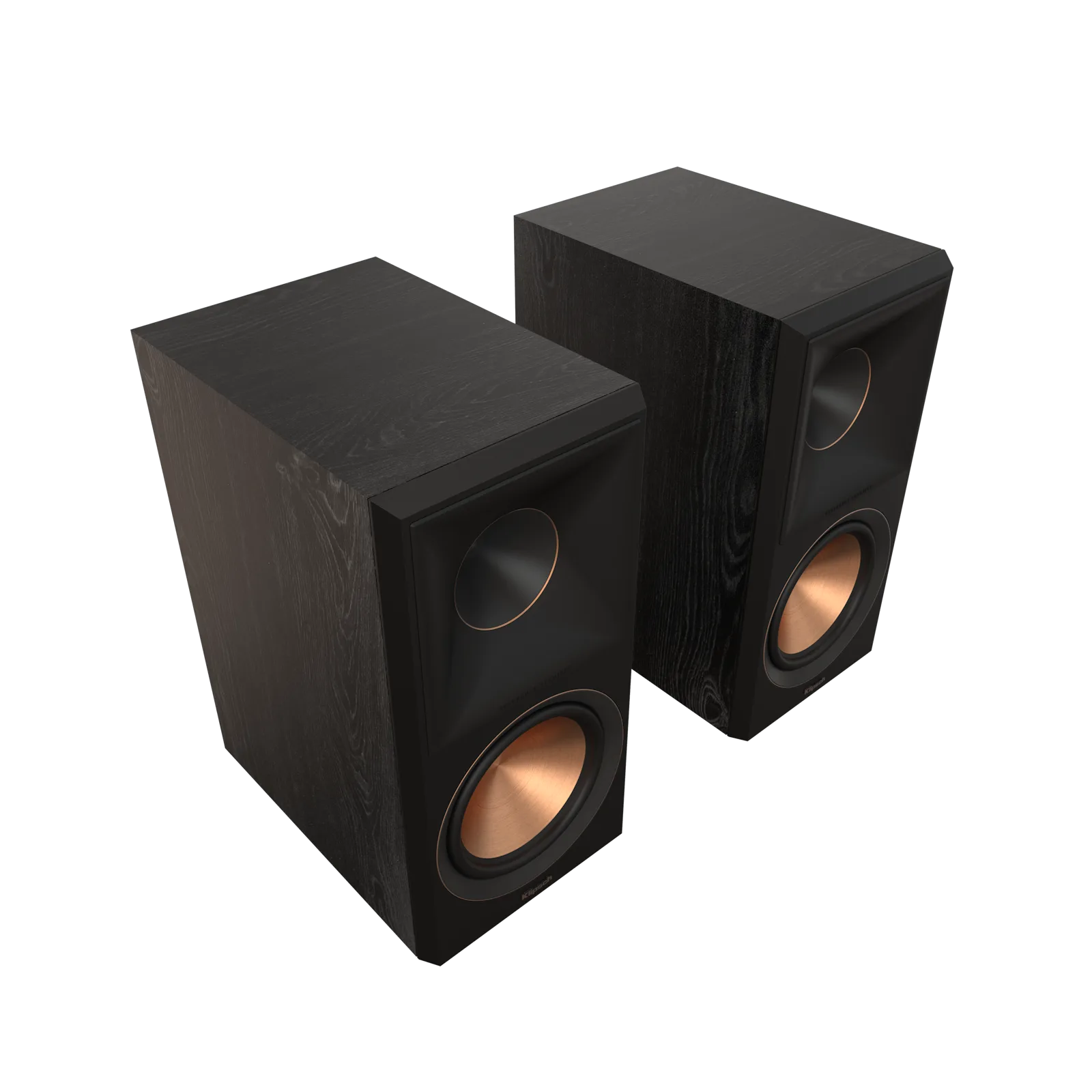
The Klipsch RP-600M II pairs a 1" Titanium LTS tweeter on a Hybrid Cross-Section Tractrix Horn with a 6.5" Cerametallic woofer in a bookshelf rated 94.5 dB half-space (86 dB measured anechoic). The right $749/pair to anchor a Denon, Marantz, or Yamaha AVR-based home theater.
✅ Pros
- +94.5 dB rated sensitivity (Klipsch, half-space) — easy to drive, though independent anechoic measurement puts it at 86 dB
- +Hybrid Cross-Section Tractrix Horn widens the sweet spot vs. older Reference Premiere generations
- +Clean, tuneful upper bass and a seamless 80 Hz handoff to a subwoofer — the crossover band the speaker is designed around
- +Dialogue, transients, and dynamics class-leading at $749/pair
- +Dual binding posts and bi-amp/bi-wire capability future-proof the system
- +Matching center (RP-504C / RP-404C), surrounds (RP-500M), and Atmos modules (RP-500SA) for a full Reference Premiere II system
- +Solid cabinet construction and finish quality in both Ebony and Walnut
❌ Cons
- −Wants to be played at real volume — low-level listening feels under-driven
- −Bright source material is exposed; older / compressed tracks can sound edgy
- −Rear port requires 6+ inches from the wall — no flush shelf placement
- −Sensitive to listening axis — best with toed-in stands, not casually placed on a credenza
- −Need a separate amplifier or AVR — passive speakers add box count vs. a wireless alternative
- −Sub is mandatory, and for music too — independent measurement puts the −3 dB point at 74.7 Hz, well above Klipsch's 44 Hz rating
The Klipsch RP-600M II is the bookshelf to buy if you already own a midrange AVR. A 1-inch Titanium LTS tweeter loaded into the new Hybrid Cross-Section Tractrix Horn sits over a 6.5-inch Cerametallic woofer in a rear-ported cabinet. Klipsch rates sensitivity at 94.5 dB at 2.83V/1m, measured half-space; independent anechoic measurement puts it nearer 86 dB. Either way a 65-watt budget receiver like the Yamaha RX-V6A drives them to roughly 98 dB peaks at a 10-foot seat — loud, though about 7 dB short of film reference level — and a step-up unit like the Denon AVR-X2800H or Marantz Cinema 70s is effortless. At $749/pair, the RP-600M II is the right answer for anyone building a real 2.1 or 5.1 system on a Denon, Marantz, or Yamaha receiver. The horn focuses dialogue and effects, the Cerametallic woofer stays clean down to the 80 Hz handoff to a sub like the SVS SB-1000 Pro, and the dual binding posts give you a bi-amp path if you want it later.
Key Specs at a Glance
The RP-600M II is a 2-way passive bass-reflex bookshelf. The tweeter is a 1" (25.4mm) Titanium LTS vented diaphragm loaded into a Hybrid Cross-Section Tractrix Horn; the woofer is a 6.5" (165mm) Cerametallic (copper-spun) cone on an IMG basket. Crossover sits at 1,500 Hz. Frequency response is 44 Hz – 25 kHz (±3 dB), sensitivity is 94.5 dB @ 2.83V/1m — a half-space anechoic figure, per Klipsch's own footnote, against 86 dB measured full-space anechoic by Erin's Audio Corner — power handling is 100W continuous / 400W peak, and nominal impedance is 8 Ω compatible. The cabinet is internally braced MDF with a rear-firing Tractrix port and dual gold-plated binding posts for bi-amp or bi-wire. Dimensions are 15.75" H × 7.95" W × 13.00" D (without grille), 18.1 lb each, available in Ebony or Walnut, at $749 USD per pair.
What's New vs. the Original RP-600M
The RP-600M II is the 2023–2024 refresh of Klipsch's most-recommended bookshelf. From across the room they look the same — copper-spun woofer behind a removable grille, horn-loaded tweeter, rear port. The acoustic changes are real, though, and they matter.
The Hybrid Cross-Section Tractrix Horn is the headline change. The horn flare is no longer a pure circular Tractrix profile — the new geometry is squared-off near the throat and rounded near the mouth, which Klipsch's engineers use to control horizontal and vertical dispersion separately. The practical result is that the "Klipsch sweet spot" widens — off-axis listeners hear less of the high-frequency rolloff that older horns produced, and the room contributes less harsh reflection from the ceiling.
A redesigned phase plug in the throat of the horn smooths the upper midrange. The old design tended to highlight upper-midrange sibilance with bright sources; the new one is smoother through 3–6 kHz, which is the band that makes or breaks dialogue intelligibility. The Cerametallic woofer cone is functionally the same recipe as before (copper-spun IMG) but with a revised cone geometry and surround for lower distortion at high excursion — on loud action scenes you hear less of the cone's own signature. Cabinet bracing was improved and the port profile was tuned to push the -3 dB point a few Hz lower than the original RP-600M.
If you already own the original RP-600M and you're happy, don't upgrade for sound — the differences are real but they're refinements, not transformations. If you're buying new today, the II is the version to get because it's what Klipsch is supporting going forward, and the broader dispersion makes it a friendlier choice for multi-seat home theater.
Sound Quality
The horn does most of the storytelling here, and it tells a different story than the original RP-600M did. The Hybrid Cross-Section Tractrix Horn loads the 1-inch Titanium LTS tweeter with substantially more output per watt than a typical dome, and it focuses that output forward at the listener. The result is what Klipsch fans have always loved — present, "lit-up" treble with dynamic snap on transients — without the upper-mid hardness that older Reference Premiere generations could produce on bright sources. Cymbals shimmer rather than splash. Dialogue sits forward and articulate without sibilance. Acoustic guitar has bite and decay in the right proportions.
The 6.5-inch Cerametallic woofer is clean rather than deep, and we previously oversold it. Bass guitar lines are tight and tuneful, kick drums hit cleanly, and the rear Tractrix port avoids the boomy "one-note bass" that lesser ported designs produce when the port resonance is too prominent. But Klipsch's 44 Hz rating is not what reaches your seat: measured full-space anechoic, the −3 dB point is 74.7 Hz and the −6 dB point is 54.2 Hz. Treat these as speakers that begin handing off in the 50–75 Hz region, not as a pair that plays full-range before you reach for a sub. The handoff to a subwoofer at 80 Hz (the THX standard) is clean, which is the right way to run these in a home theater.
Dynamics are the headline, though not for the reason the spec sheet suggests. Klipsch's 94.5 dB is a half-space number; measured anechoic the RP-600M II is 86 dB, which is ordinary. What is not ordinary is the horn's controlled directivity and how little the speaker compresses when you push it. A modest 65W-per-channel AVR takes the pair to roughly 98 dB peaks at a 10-foot seat — comfortably above where most people actually listen, but about 7 dB short of the 105 dB peaks film reference level asks for. Plan on a satisfying 77–82 dB average rather than reference level. The RP-600M II responds to transients (a snare hit, a door slam, a gunshot in a movie) with the kind of immediate, uncompressed snap you usually have to pay much more for. That snap is the horn's directivity and its low compression at high output, not its sensitivity — at 86 dB measured, the RP-600M II is no easier to drive than the audiophile bookshelves it gets compared against.
Where they're honest about their limits: at very low listening volumes, the horn's directivity is a tradeoff — they want to be played at a real volume to come alive, and they image best from a fairly defined seat. If you do most of your listening at -30 dB on the AVR display, a wider-dispersion bookshelf with a soft-dome tweeter (say, the KEF Q150 or ELAC Debut 2.0 B6.2) will sound subjectively more "easy" at low volume. The RP-600M II wants to be turned up.
In a 2.1 / 5.1 System
This is what the RP-600M II is built for, and it's where the value of the speaker is highest.
As stereo fronts in a 2.1 setup with a sub like the SVS SB-1000 Pro crossed over at 80 Hz, you get a system that handles music and movies equally well. The fronts deliver the dialogue, vocals, and detail; the sub handles the LFE and the lowest octave of music. Crossing at 80 Hz also relieves the bookshelves of doing work they don't love (sub-40-Hz output), which lets them play louder cleanly on the rest of the spectrum.
As fronts in a 5.1 system, pair the RP-600M II with the matching Klipsch RP-504C center (or the smaller RP-404C if your shelf is shallow), two RP-500SA Atmos modules or the smaller RP-500M as surrounds, and a sub. Voicing across the line is consistent — Klipsch tunes the Reference Premiere II line so a multichannel mix pans across the front stage and into the surrounds without timbre shifts. If you're committing to the brand for a full system, this is the price tier where the system makes sense.
As surrounds in a system anchored by Klipsch RP-8000F II or RP-6000F II floorstanders, the RP-600M II is overkill but works — most buyers will pick the smaller RP-500M for surrounds and save the budget.
Setup, Placement, and Stands
A few practical things matter more than the spec sheet. Use stands, not a shelf — the rear Tractrix port doesn't love being shoved against a wall. Give it at least 6 inches of clearance, ideally 12+. Built-in shelves with the speaker pushed back will exaggerate the low end and muddy the lower mids. A pair of 24-to-26-inch stands gets the tweeter to ear height when seated.
Toe them in. Aim each speaker at, or just behind, your listening seat. The Hybrid Tractrix Horn rewards on-axis listening with the tightest imaging; the wider dispersion of the II makes off-axis listeners hear more high frequencies than the original RP-600M did, but the sweet spot is still real.
Run heavier-gauge wire than you'd guess. The RP-600M II measures 86 dB anechoic, so it asks an ordinary amount of amplifier power rather than an unusually small one, and the long runs typical of a home theater benefit from 14-gauge (or 12-gauge for runs over 25 feet). The dual binding posts accept banana plugs cleanly.
Don't bi-amp from a single AVR. The dual binding posts are there if you ever want to bi-amp from two stereo amps, but bi-amping a single AVR by splitting its single channel doesn't gain you anything meaningful and forces you to give up surround channels. Leave the jumpers in place.
Limitations Worth Knowing
They want to be played at a real volume. The horn-loaded design is at its best driven hard. Low-volume late-night listening will reveal that the tweeter wants more output than you're feeding it, and the speakers will sound less engaging than a soft-dome bookshelf in the same room.
Bright source material is exposed. The Hybrid Tractrix Horn is gentler than older Klipsch designs in the 3–6 kHz region, but it's still a horn — a poorly mastered or compressed track will sound noticeably edgy on the RP-600M II compared to a deliberately polite speaker. If you do most of your listening on low-bitrate streaming or older CDs, audition them first.
Rear port limits placement. You need to pull these out from the wall by at least 6 inches, and you can't put them into a tight bookshelf cubby. If your room layout forces a sealed enclosure, look at a front-ported alternative (KEF Q150) instead.
No matching wireless system path. Unlike the KEF LSX II LT, these are passive speakers — you need a real amplifier or AVR to drive them. That's the design choice that lets them cost $749/pair instead of $1,500+, but it's a real cost in box count and wiring.
Single subwoofer assumed. Measured output is already −3 dB at 74.7 Hz, so a subwoofer crossover is part of the design intent rather than optional — for music as much as for home theater. Budget a sub.
Who Should Buy the Klipsch RP-600M II
Buy them if you already own a real AVR — particularly the Denon AVR-X2800H, Marantz Cinema 70s, or Yamaha RX-V6A — and you're building or upgrading the front stage of a 2.1 or 5.1 system. They're the right choice if you watch movies and TV more than half the time (the horn excels at dialogue and effects), you listen at real volumes, not background-only, you can give the speakers space (stands and at least 6 inches of port clearance), and you want a clear upgrade path with matching center, surrounds, and Atmos modules in the Reference Premiere II line.
Consider the KEF LSX II LT instead if you don't have an AVR and don't want one — the LSX II LT is a complete wireless stereo system in two boxes. The LSX II LT is also the better pick for desk-scale or small-living-room-scale rooms (under 200 sq ft) and listeners who prioritize music streaming over movie watching.
Consider stepping up to the Klipsch RP-6000F II floorstanders ($1,398/pair) if your room is over ~350 sq ft, you don't want to budget for a subwoofer immediately and want the front stage to extend lower on its own, and you have the floor space.
Consider a different brand (KEF Q150, ELAC Debut 2.0 B6.2, Wharfedale Diamond 12.1) if you're sensitive to horn coloration on bright source material, you do most of your listening at low background levels, or your room is heavily reflective and you'd benefit from a more diffuse off-axis response.
Klipsch RP-600M II vs. KEF LSX II LT
These two are not direct competitors despite the price overlap — they solve different problems. The RP-600M II ($749/pair) is a passive bookshelf with a 1" Titanium LTS tweeter on a Tractrix Horn and a 6.5" Cerametallic woofer; it requires an external AVR or amp and has no streaming of its own. The KEF LSX II LT ($999/pair) is an active wireless stereo system with a Uni-Q coincident MF/HF array, a 4.5" magnesium/aluminum woofer, 100W (LF) + 30W (HF) per channel built in, and AirPlay 2, Chromecast, Spotify Connect, and Roon Ready streaming on board.
The RP-600M II is the front-stage anchor for a home theater built around a real AVR. The LSX II LT is a complete music system in two boxes that needs nothing else. Pick by use case, not spec.
Klipsch RP-600M II vs. the Original RP-600M
The original RP-600M is the best-selling Klipsch bookshelf of the last decade and is still in the secondary market at ~$400/pair used. The II is a worthwhile refresh: broader dispersion via the Hybrid Tractrix Horn, smoother upper midrange, slightly cleaner low end, marginally lower distortion at high SPL. If you find a clean used original RP-600M for $400, it remains a great deal. If you're paying retail for new, the II is the version to buy — the dispersion change alone is worth it for multi-seat home theater.
Bottom Line
The Klipsch RP-600M II is the bookshelf speaker that finishes a midrange AVR-based home theater. It is an easy, benign load for a budget-to-midrange Denon, Marantz, or Yamaha receiver — just don't buy it on the 94.5 dB sticker, which is a half-space figure; the new Hybrid Tractrix Horn fixes the upper-midrange hardness that haunted earlier Reference Premiere generations; and the Cerametallic woofer extends usefully down to where a subwoofer takes over at 80 Hz. At $749/pair, this is the front stage you build a real 5.1 around — not the compromise.
If you don't already own an AVR, the KEF LSX II LT is the simpler answer. If you do, the RP-600M II is the obvious choice.
The Klipsch RP-600M II is available on Amazon in Ebony or Walnut at $749/pair.
Corrections
Updated 2026-09-24. This review originally stated a sensitivity of 96 dB and a ~45 Hz low-frequency limit for the RP-600M II. Both figures were carried over from the original RP-600M and are wrong for the II. We have corrected them, and we are naming the change here rather than editing quietly.
What changed:
- Sensitivity: 96 dB → 94.5 dB. Klipsch's current spec sheet for the II rates it at 94.5 dB @ 2.83V/1m, and footnotes that figure as half-space anechoic. Measured full-space anechoic on a Klippel Near-Field Scanner by Erin's Audio Corner, the same speaker returns 86.0 dB. We now publish both, and we do our amplifier arithmetic on the measured number.
- Low-frequency extension: ~45 Hz → −3 dB at 74.7 Hz measured. Klipsch rates 44 Hz – 25 kHz ±3 dB. The independent measurement puts −3 dB at 74.7 Hz and −6 dB at 54.2 Hz. Our claim that the pair works as full-range stereo before you reach for a sub was wrong and has been removed.
- Amplifier headroom. Our statements that a 65-watt receiver drives this pair "with headroom to spare" were computed off the 96 dB figure. On the measured 86.0 dB, the same receiver reaches about 98 dB peaks at a 10-foot seat — loud, but roughly 7 dB below film reference level.
- Physical specs. Dimensions, weight, frequency response and impedance wording now follow Klipsch's v02 spec sheet for the II: 15.75" × 7.95" × 13.00", 18.1 lb each, 44 Hz – 25 kHz ±3 dB, "8 Ohms Compatible."
The full arithmetic and both sensitivity figures side by side are in our WiiM Amp + Klipsch RP-600M II pairing analysis. Why Klipsch's half-space method reads 7–8.5 dB high — and why the boundary alone only explains 6 dB of it — is worked through in Speaker Sensitivity Explained.
Our Verdict
The Klipsch RP-600M II pairs a 1" Titanium LTS tweeter on a Hybrid Cross-Section Tractrix Horn with a 6.5" Cerametallic woofer in a bookshelf rated 94.5 dB half-space (86 dB measured anechoic). The right $749/pair to anchor a Denon, Marantz, or Yamaha AVR-based home theater.
Ready to buy the Klipsch RP-600M II?
Buy on Amazon →Affiliate link — we may earn a commission at no extra cost to you.